How to Measure for a Race Suit — Every Measurement, Step by Step
To measure for a race suit, you take a full set of body measurements over light clothing with a soft tape — the circumferences (neck, chest, stomach, waist, hips, bicep, thigh) and the lengths (torso, back, shoulder, sleeve, inseam, outseam), plus your height and weight. A custom suit is patterned to those numbers, so accurate measurements are what turn a suit into a true racing fit — get them right and it fits like it was drawn around you, because it was.
- One full form, taken over light clothing with a soft tape
- A helper makes every number far more accurate
- If it doesn’t fit, we remake it
One Full Form
Neck to outseam
Soft Tape Only
Over light clothing
Have a Helper
Far more accurate
Fit Guaranteed
If it doesn’t fit, we remake it
Why accurate measurements matter
Accurate measurements matter because in a fire suit, fit is part of the protection — not just the comfort. A suit cut to your real numbers holds an even layer of Nomex® and a trapped air gap against the whole body, the way it was certified to. A loose suit leaves slack and cold spots where the air gap collapses; a tight one pulls the layers thin and pins you in the seat.
Fit is also control. A suit that binds at the shoulders or arms slows your hands on the wheel and tires you over a stint, while one that’s baggy snags on belts and cage. Good numbers buy you protection, mobility and a suit you forget you’re wearing — the whole point of going custom.
Custom vs off-the-rack →
What you need to measure
Gather four things and the whole process takes about ten minutes — most of it spent making sure each number is right the first time.
A soft tape measure
Use a flexible cloth or vinyl tailor’s tape — not a stiff metal builder’s tape. If you only have a hard tape, run a length of string around the body, mark it, then measure the string flat.
Light, close-fitting clothing
Measure over a thin t-shirt and leggings or shorts — never over a bulky hoodie, jeans or your old race suit. Extra fabric adds inches and throws the whole pattern off.
A second person to help
Most of these are hard to take accurately on yourself. Have a friend hold the tape level and read the number while you stand in a relaxed racing posture — it’s the single biggest accuracy upgrade.
Our measurement form
Print the form below and write each number on it in inches or centimetres (tell us which). It mirrors exactly how we pattern the suit, so nothing gets lost in translation.
The full measurement list
A custom race suit is patterned from this complete set of measurements — circumferences and lengths together. Take them in order, over light clothing, with the tape level. Each row tells you exactly where to place the tape and what the landmark is.
| Measurement | How to take it | Landmark |
|---|---|---|
| AroundNeck | Wrap the tape around the base of the neck where a collar sits, level all the way round, with one finger’s slack so the neck of the suit closes without choking. | Around the base of the neck |
| AroundChest | Run the tape around the fullest part of the chest with arms down and a big breath in. Keep it level across the shoulder blades — don’t let it ride up at the back. | Fullest point, arms down, breathe in |
| AroundStomach | Measure around the widest part of the stomach, between the chest and the waist. Stand relaxed and don’t suck in — this is the number that sets the suit’s mid-body room. | Widest part of the stomach |
| AroundWaist | Stand with feet together and measure around the waist at its widest part. Let the tape sit where the body naturally bends rather than pulling it in tight. | Feet together, widest part of the waist |
| AroundHips | Feet together, measure around the fullest part of the hips and seat, keeping the tape parallel to the floor the whole way around. | Feet together, widest part of the hips |
| LengthTorso length | Measure from the crotch seam straight up the front to the middle of the collar bones. This vertical number stops a suit from riding short or bunching at the shoulders. | Crotch seam → middle of collar bones |
| LengthBack length | From behind, measure from the crotch seam up the spine to the base of the neck. It pairs with torso length to set how the suit sits front-to-back. | Crotch seam → base of neck, from behind |
| LengthShoulder width | Measure across the back from the tip of one shoulder to the tip of the other, straight across — not following the curve. | Shoulder tip → shoulder tip, across |
| LengthSleeve length | With the arm relaxed and slightly bent, measure from the tip of the shoulder, over the elbow, down to the wrist bone. | Shoulder tip → wrist bone |
| AroundBicep | Flex the arm and measure around the fullest part of the bicep. Race suits need real room here so the arms don’t bind when you’re working the wheel. | Around the bicep, flexed |
| LengthInseam | Measure along the inside of the leg from the crotch seam straight down to the ankle bone, standing barefoot with legs slightly apart. | Crotch seam → ankle bone |
| LengthOutseam | Measure down the outside of the leg from the waistband to the ankle bone. With inseam, it sets true leg length so cuffs land right, not pooled at the boot. | Waistband → ankle bone |
| AroundUpper thigh | Kneel on one knee and measure around the thigh, keeping the tape parallel to the floor at the fullest part. | Around thigh, parallel to floor |
| LengthHeight & weight | Stand against a wall, no shoes, heels together, and measure top of head to floor for height. Add your current weight — together they sanity-check every other number. | Top of head to floor + body weight |
Write each number on the measurement form in one unit — inches or centimetres — and tell us which.
The body-measurement diagram
This is where every measurement lands on the body. Orange points are circumferences you measure around; blue points are lengths you measure along. Match each to its row in the list above before you pick up the tape.
Where each measurement is taken
- NeckAround
- ChestAround
- StomachAround
- WaistAround
- HipsAround
- Torso lengthLength
- Back lengthLength
- Shoulder widthLength
- Sleeve lengthLength
- BicepAround
- InseamLength
- OutseamLength
- Upper thighAround
- Height & weightLength
Around = a circumference: wrap the tape level all the way round. Length = a straight run along the body, tape flat from one landmark to the next. The printable measurement form labels every point A–Q in the same order.
Prefer to watch it done? Our measurement video walks through taking every chest, waist, sleeve, inseam and outseam measurement with a soft tape and a helper — press play and follow along, tape in hand.
How to read a size chart vs custom
A size chart maps your numbers to the nearest stock size; a custom suit skips the chart and is cut to your numbers directly. A chart is fine when you fall squarely inside one size — but the moment you’re between sizes or your build isn’t “standard,” custom wins.
| Standard size chart | Custom (measured to you) | |
|---|---|---|
| What it’s based on | A few stock sizes (S–XXL) rounded to the nearest fit | Your own measurements — every number on the form |
| When you’re between sizes | You round up or down and live with the gap | No rounding — the suit is cut to your exact figures |
| Sleeve & leg length | Fixed to the size’s preset length | Set from your real sleeve, inseam and outseam |
| Build that isn’t “standard” | Broad shoulders or longer legs fight the chart | Patterned to your shape, men’s, women’s or youth |
| If the fit is off | Returns, swaps or alterations | Built to approved numbers — if it doesn’t fit, we remake it |
Download our standard size chart to compare — then send your real numbers for a cut that ignores it.
Measuring posture & tips
How you stand and hold the tape changes the numbers as much as where you place it. Three habits keep every measurement honest.
Snug, not tight
Keep the tape flat against the body, firm enough that it won’t slip but loose enough to slide a finger under. Pulling it tight to “read smaller” only produces a suit you can’t move in.
Stand in racing posture
Relax your shoulders, look straight ahead and breathe normally. For circumferences, stand naturally; for the chest, take the number on a deep breath in so the suit never feels tight in the car.
Measure twice, level once
Take each measurement twice and keep the tape parallel to the floor. If the two readings differ, measure a third time and use the middle value.
Common measuring mistakes
Almost every bad fit traces back to one of these. Each row pairs the mistake we see most with the fix that keeps your numbers true.
Measuring over a hoodie, jeans or your current race suit
Measure over a thin t-shirt and shorts or leggings so the tape reads your body, not the fabric
Pulling the tape tight to “read smaller”
Keep it snug but flat — tight numbers build a suit you can’t move or breathe in
Letting the tape tilt or ride up at the back
Keep every circumference parallel to the floor, level all the way around
Measuring yourself solo and guessing the chest
Have a helper read the tape — chest, back length and sleeve are near-impossible alone
Mixing inches on some numbers and centimetres on others
Pick one unit, use it for every measurement, and label it clearly on the form
Sucking in your stomach or holding your breath
Stand relaxed and breathe normally — measure the body that actually drives the car
Men’s, women’s & youth fit
The same measurement form drives every suit — we just pattern your numbers onto the right block for your build.
| Fit | How we pattern it |
|---|---|
| Men’s | Standard cut through the chest, waist and seat with a longer torso and arm length. Most adult drivers fall here — we still pattern to your exact numbers, not a generic size letter. |
| Women’s | A true women’s block with a shaped waist, room through the hips and adjusted shoulder and arm proportions — not a small men’s suit relabelled. The same form drives it. |
| Youth | Scaled to a young driver’s frame with shorter limbs and torso. Send the same measurements; for growing racers, measure right before ordering so the fit is current. |
See the women’s-specific cut on our women’s race suits →
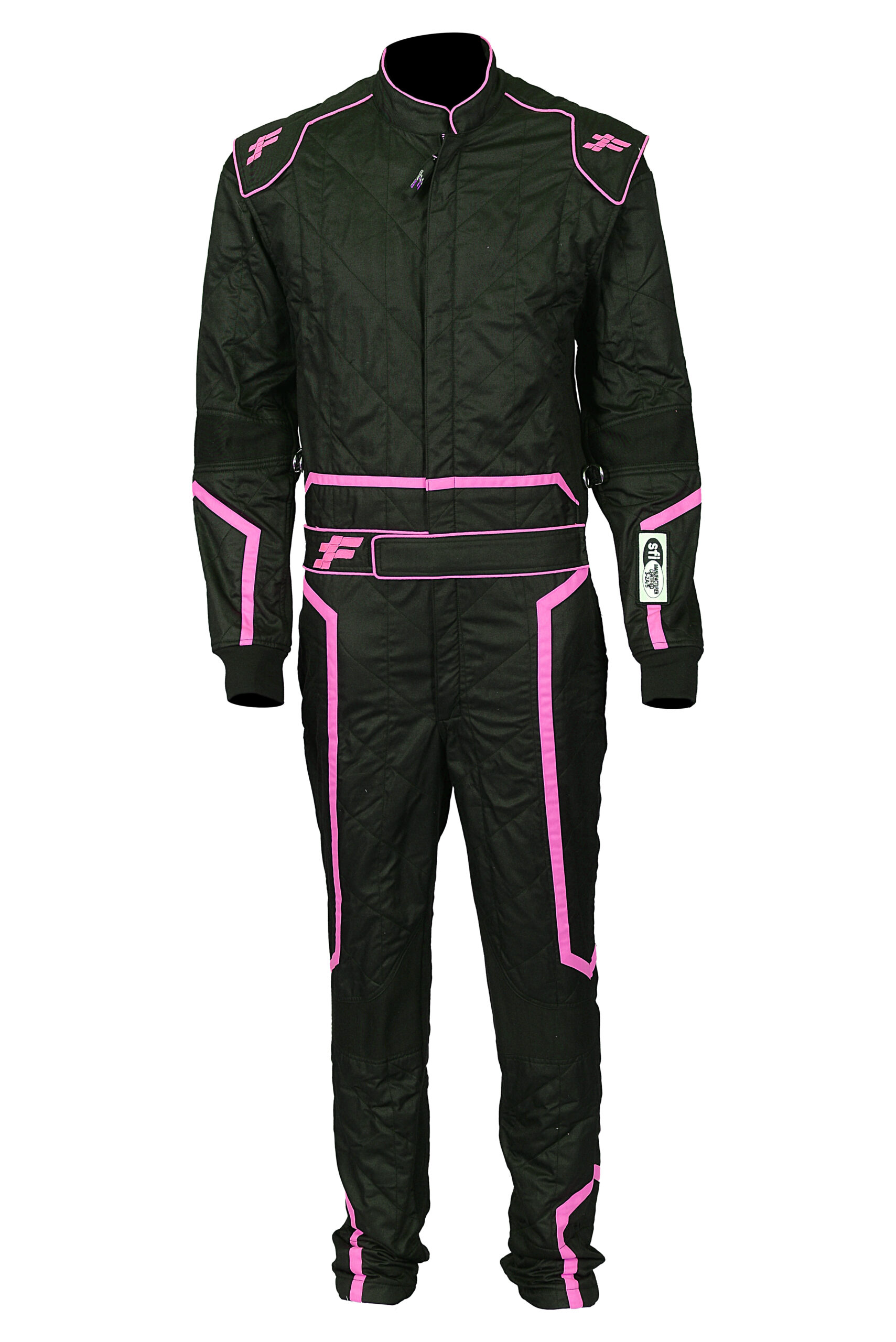
Submit your measurements & get a mockup
Once your form is complete, the build follows. We pattern a custom SFI-5 race suit to your numbers — not to a stock size letter — in men’s, women’s or youth, and you approve a free design mockup before anything is cut.
See your exact design in 3–24 hours, built in 3.5 weeks. And if the finished suit doesn’t fit the way it should, we’ll remake it. Walk through the full sequence on our design process.
Build a custom SFI-5 race suit →Everything above is the method — these are the edge-case questions racers ask once they pick up the tape.
Measuring questions
What measurements do I need to take for a custom race suit?
What if I’m between sizes or my numbers fall between chart sizes?
Should I measure over my current race suit or my underwear?
Do I measure with a tape pulled tight or relaxed?
Inches or centimetres — which should I send?
How do I measure a youth or child driver?
Do I really need someone to help me measure?
What happens after I submit my measurements — can you fix a suit that doesn’t fit?
Choosing your protection level too? See SFI ratings explained →
Send your measurements, get a suit cut to you
Download the form, take your numbers, and see your exact design in 3–24 hours — built in 3.5 weeks. If it doesn’t fit, we remake it.