How to Wash a Nomex Race Suit (Without Ruining It)
To wash a race suit, turn it inside out, hand-wash it or run a gentle cold cycle with a small dose of mild detergent, then air-dry it flat out of direct sun. Never use bleach, fabric softener, hot water, a tumble dryer or dry-cleaning solvents — those are what degrade the flame-resistant Nomex® and shorten the suit’s life.
This guide gives you the definitive step-by-step method, the full list of what not to do, how to lift oil, grass and sweat stains, how to dry and store the suit, and how careful washing protects its SFI rating and lifespan.
- Cold water, mild detergent, gentle or hand wash
- No bleach, no softener, no dryer — ever
- Air-dry flat in shade, then store clean and dry
Always Cold
Heat ages the fibers
Mild Detergent
Free-and-clear, small dose
No Softener
It’s flammable on FR
Air-Dry Only
Skip the tumble dryer
Why a Nomex® suit needs special care
A race suit is flame-resistant because of the Nomex® fiber itself — and heat plus harsh chemicals are exactly what wear that fiber down. Unlike a treated coating that washes off, Nomex® is inherently flame-resistant, so the protection is woven in. But hot water, tumble-drying and aggressive cleaners still age the fibers, weaken seams and dull the weave over time.
Two additives do specific, hidden damage: bleach attacks the fiber and color, while fabric softener leaves a waxy, water-repelling film that is itself flammable. Wash it gently and the suit keeps the seconds of protection it was certified for; wash it carelessly and you quietly trade that protection away.
What is Nomex® →How to wash a race suit — step by step
Follow these eight steps in order and a Nomex® suit comes out clean with its rating, fit and graphics intact. The whole wash takes about an hour of mostly hands-off time, plus drying.
Empty pockets, close every zipper & Velcro
Zip the front and cuffs and fasten all hook-and-loop tabs. Open zippers snag the Nomex® and Velcro grabs and pills the shell — closing them protects both the suit and anything washed with it.
Pre-treat oil & grease spots
Dab a little mild liquid detergent straight onto fuel, oil or grease marks and gently work it in with your fingers. Give it five minutes before washing so the surfactant lifts the stain instead of setting it.
Hand-wash, or use the gentle/delicate cycle
Best: soak in cool water with a capful of mild detergent and agitate by hand. Machine is fine on the gentle/delicate cycle — turn the suit inside out and use a mesh laundry bag to cushion the zippers.
Wash cold, with a small dose of mild detergent
Set the water to cold (≤30°C / 86°F). Use a free-and-clear or sport-tech detergent at half the normal dose — heat and harsh chemistry are what age flame-resistant fabric, not the dirt.
Rinse twice — leave zero detergent behind
Run an extra rinse. Trapped detergent residue stiffens the weave and can leave a faint film that dulls how the Nomex® breathes, so rinse until the water runs clear.
Press out water — never wring or twist
Lift the suit, support its weight, and gently press the water out. Wringing twists the seams and the inner air gaps that give a double-layer suit its rating; a flat press keeps the build intact.
Air-dry flat or on a wide hanger, out of the sun
Hang in a shaded, airy spot or lay it flat on a towel. Skip the dryer and direct sunlight completely — both bake the fibers and fade printed sponsor graphics over time.
Store clean, dry & breathable
Only put the suit away fully dry. Hang it on a padded hanger in a cool, ventilated closet — never sealed in plastic — so no damp, mildew or pressure marks set in before your next race day.
Built right, the suit underneath is just as important — single vs double layer →
What not to do when washing a suit
Most ruined race suits aren’t worn out — they’re washed wrong. These are the seven habits that quietly degrade flame resistance, plus the safe move to make instead.
| Never use this | Do this instead | Why it harms the suit |
|---|---|---|
| ✕ Bleach (chlorine or oxygen) | ✓ Pre-treat with mild detergent, then a cold gentle wash | Strips and weakens the flame-resistant fibers, fades color and can void the rating |
| ✕ Fabric softener or dryer sheets | ✓ A small dose of free-and-clear detergent, double-rinsed | Coats the weave with a flammable, water-repelling film that defeats Nomex® |
| ✕ Hot water | ✓ Cold water only — 30°C / 86°F or below | Accelerates fiber aging and can shrink panels and seams |
| ✕ Tumble dryer | ✓ Air-dry flat or on a wide hanger, in shade | High heat degrades the FR fabric and warps the protective air gaps |
| ✕ Dry-cleaning solvents | ✓ Wash at home with water and mild detergent | Harsh chemicals leave residues that compromise flame resistance |
| ✕ Ironing the shell or graphics | ✓ Steam lightly from a distance, or hang to release creases | Direct heat scorches fibers and lifts printed sponsor logos |
| ✕ Stiff brushes & scrubbing | ✓ Dab and blot stains; let the detergent do the lifting | Abrades the surface, pills the Nomex® and frays seams |
Bleach, softener, hot water and the dryer are the four that do the most damage — avoid those and you’re most of the way there.
How to remove common stains
The rule for every stain is the same: treat it before it sets, and never put heat on it until it’s gone. Here’s how to handle the three racers deal with most.
Work mild liquid detergent into the spot with your fingers, wait 5 minutes, then cold-wash. For stubborn marks, repeat before drying — heat sets oil permanently, so never dry between attempts.
Let mud dry, brush off the loose crust by hand, then pre-treat the green stain with detergent and a cool soak. Dirt-track suits often just need a longer cold soak before the gentle cycle.
Add a splash of white vinegar to a cool soak to neutralize salt and smell, then wash as normal. Vinegar is FR-safe; deodorizing sprays and softeners are not.
Whatever the stain, cold water and patience beat heat and scrubbing every time.
Dry it right, then store it clean
Air-dry every Nomex® suit — flat on a towel or on a wide hanger, in a shaded, airy spot, never in a dryer or direct sun. Tumble heat ages the fibers and sunlight fades printed sponsor graphics, so patience here protects both protection and looks. Press water out first; don’t wring.
Put the suit away only when it’s fully dry. Hang it on a padded hanger in a cool, ventilated closet, or lay it flat — never sealed in a plastic bag, which traps moisture and breeds mildew and odor. A clean, dry, well-hung suit holds its shape and is ready to pass tech next race day.
How a suit should fit →How washing affects the SFI rating & lifespan
A correct wash does not lower an SFI rating — but the wrong wash quietly does. Because Nomex® is inherently flame-resistant, a cold, mild-detergent wash leaves the certified seconds of protection intact. What erodes them is heat, bleach, softener and solvents: they age fibers, weaken seams and leave flammable films that undercut the suit you trusted.
Good care also stretches the suit’s usable life between SFI re-certifications. A clean, well-stored suit looks newer, fits longer, and is far more likely to pass tech when the recert clock comes due — which is why washing it right is part of keeping it legal.
Do race suits expire? →
Keep your custom suit looking new
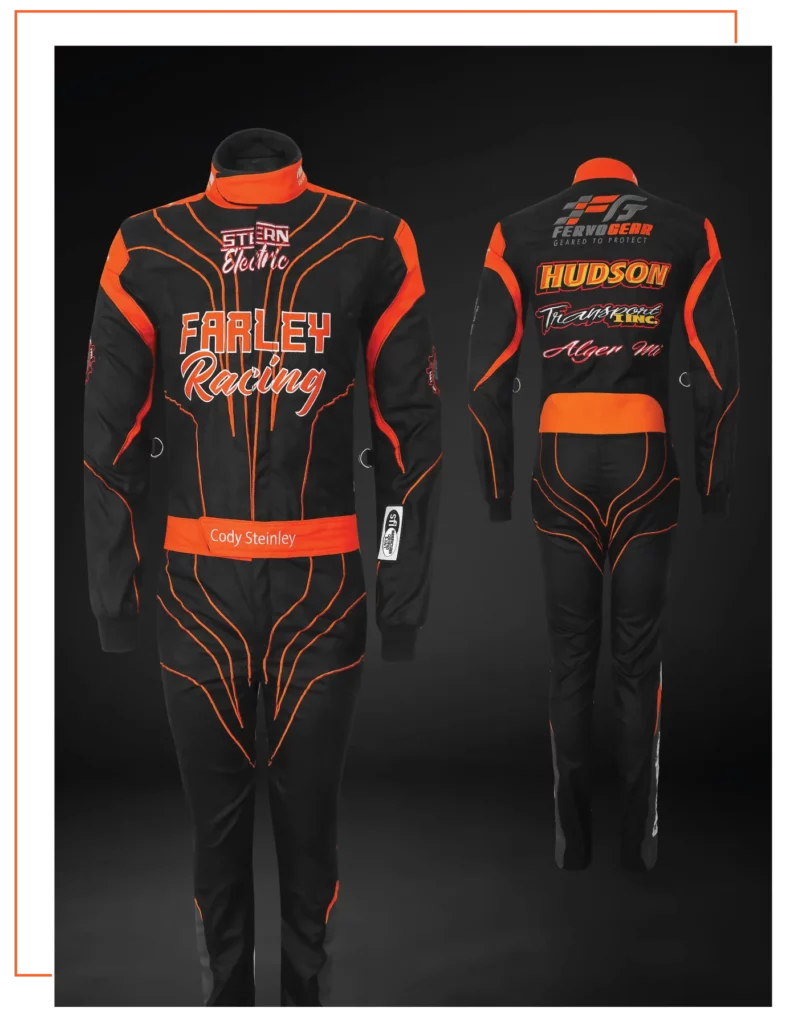
Careful washing is what keeps bold, custom graphics crisp and colors deep season after season. Every FervoGear suit is built from double-layer Nomex®, independently certified to SFI 3.2A/5, and printed for durability — so the design you approve in your free mockup is the design that lasts, as long as you skip the heat and harsh chemicals.
Cut to your exact measurements, with a sewn-in SFI tag tech can verify, your suit is built to be worn hard and washed gently for years.
Custom SFI-5 race suits →Everything above is the method — these are the edge-case questions racers ask once their suit needs a wash.
Washing a race suit — questions
Can you machine-wash a Nomex race suit?
Will washing reduce the SFI rating or fire protection?
How often should I wash my race suit?
What detergent is safe for a Nomex suit?
Why can’t I use fabric softener on flame-resistant fabric?
Can I dry-clean a race suit instead of washing it?
How do I get fuel or oil stains out of a suit?
How should I store my suit between races?
Choosing your build first? Start with custom SFI-5 race suits →
A suit worth caring for, built to your design
Tell us your series and we’ll spec the certified, double-layer Nomex® suit it requires — see your exact design in 3–24 hours, built in 3.5 weeks.