Matching Race Gear: Gloves, Boots & Nomex Layers
Racing safety gear is the full set of fire-protective equipment a driver wears — and the suit is only the core layer. A complete SFI-rated kit is a driver suit + gloves + shoes + balaclava + FR underwear, worn under a rated helmet. Each piece carries its own certification: the suit to SFI 3.2A, the gloves and shoes to SFI 3.3, the balaclava and base layer to SFI 3.3.
This guide covers every layer of the kit, the spec each piece needs, why a matching set protects you head to toe where a mismatched one leaves a gap, and how it all applies to a custom race suit built to your design.
- A full kit = suit + gloves + shoes + balaclava + FR underwear
- Gloves & shoes carry their own SFI 3.3 rating
- Protection is set by the weakest link, not the suit alone
Suit Is The Core
SFI 3.2A/5 base layer
Gloves & Shoes
Their own SFI 3.3 spec
Weakest Link Wins
Seal every gap
Free Matching Set
With every FervoGear suit
The full racing safety gear checklist
A complete kit is five protective pieces plus a helmet, and each one carries its own SFI spec. Below is every item, the rating it needs, and why it earns a place in the kit — the suit is the foundation, but the accessories are what seal it.
| Gear item | SFI spec | Why it’s in the kit |
|---|---|---|
| Driver suitCore layer · most-ordered build | SFI 3.2A/5 | The core barrier — double-layer Nomex® gives ~10 seconds of fire protection and the rating most rulebooks check. |
| Racing gloves | SFI 3.3/1 or /5 | Hands grip a hot wheel and shield your face during an exit — bare or street gloves melt where Nomex® holds. |
| Racing shoes / boots | SFI 3.3/5 | Thin FR soles read the pedals while protecting feet from floorpan heat and a footwell fire. |
| Balaclava (head sock) | SFI 3.3 | Seals the gap between helmet and collar so flame can’t reach the face, neck or hair. |
| FR underwear / base layer | SFI 3.3 | Adds an insulating Nomex® layer under the suit — often required to make a single-layer suit legal. |
| Helmet (support) | Snell SA / FIA | Not SFI 3.x, but the kit isn’t complete without it — your gear has to seal to the helmet line. |
SFI specs are the typical requirement — the binding number is whatever your series rulebook prints for each piece.
Why a matching kit matters
Your fire protection is only as strong as its weakest link. A 3.2A/5 suit buys roughly 10 seconds to get clear of a fire — but that margin disappears at the first uncovered patch of skin. Bare hands on a hot wheel, a cotton sock in the footwell, an open gap at the collar: each one is where heat reaches you first, no matter how good the suit is.
A matching set closes those gaps by design. Every piece is rated and sized to overlap the next, so there’s no exposed skin from collar to cuff to boot — and the whole kit reads as one design instead of four mismatched brands.
SFI ratings explained →Every layer of the kit in depth
Each accessory protects a part of you the suit can’t reach alone. Here’s what every piece does, the spec it needs, and who it’s for.
A fitted Nomex® glove keeps grip and feel on the wheel while protecting the most exposed part of you in a fire — the hands you raise to shield your face. Look for external seams (no hot ridges inside), a pre-curved palm and a wrist that overlaps the suit cuff.
A thin, flame-resistant sole lets you feel the pedals through a Nomex® upper that resists floorpan heat and footwell fire. A narrow last and a low heel-to-toe drop keep your foot precise on the throttle and brake.
The head sock seals the one gap your suit and helmet leave open — around the face and neck. A double-eyeport or single-eyeport Nomex® hood tucks into the collar so no skin or hair is left exposed to flame.
A Nomex® base layer adds an insulating air gap under the suit, wicks sweat and — with a single-layer suit — is often what makes the package legal. Tops, bottoms, socks and a balaclava together form the full underlayer.
How a full kit covers the driver, head to toe
Body coverage by layer · 0 → 100%The suit covers the most surface, but the gloves, shoes and balaclava cover the parts most exposed to flame in a real incident — the hands you raise, the feet near the fuel, the face at the helmet line. Coverage is only complete when all four overlap.
Racing gloves
Racing gloves are SFI 3.3 Nomex® gloves built to keep grip and feel while protecting the most exposed part of you in a fire. Your hands hold a wheel that gets hot and are the first thing you raise to shield your face — bare or street gloves melt exactly where Nomex® holds. The right glove buys you the same seconds the suit does, at the point you need them most.
Fit is everything: look for external seams so no hot ridge presses your palm, a pre-curved shape that matches a hand on the wheel, and a long cuff that overlaps the suit sleeve so no wrist is left bare. Too loose and you lose feel; too tight and your hand fatigues — a glove cut to your measurements solves both.
How to measure →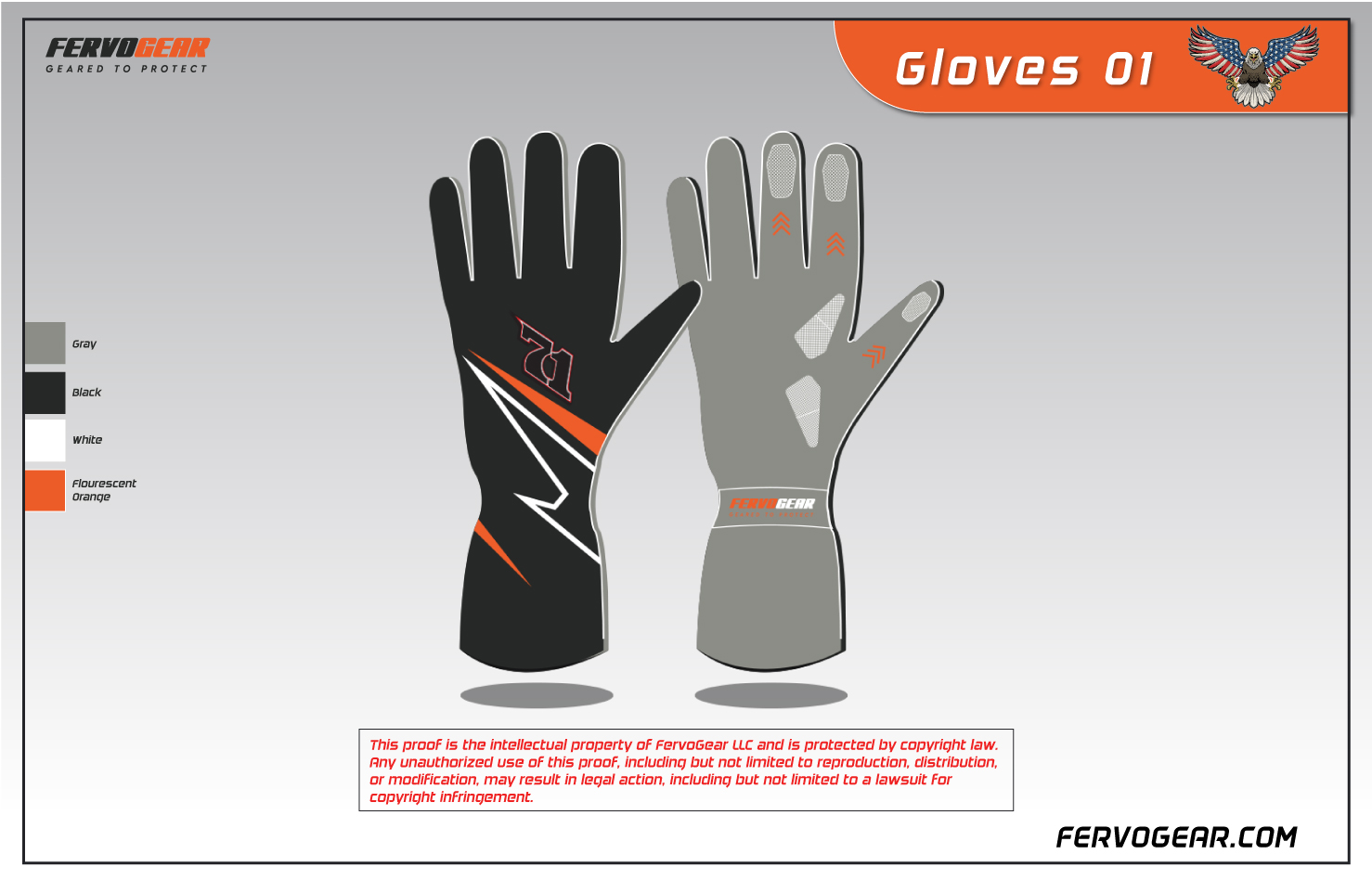
Racing shoes & boots
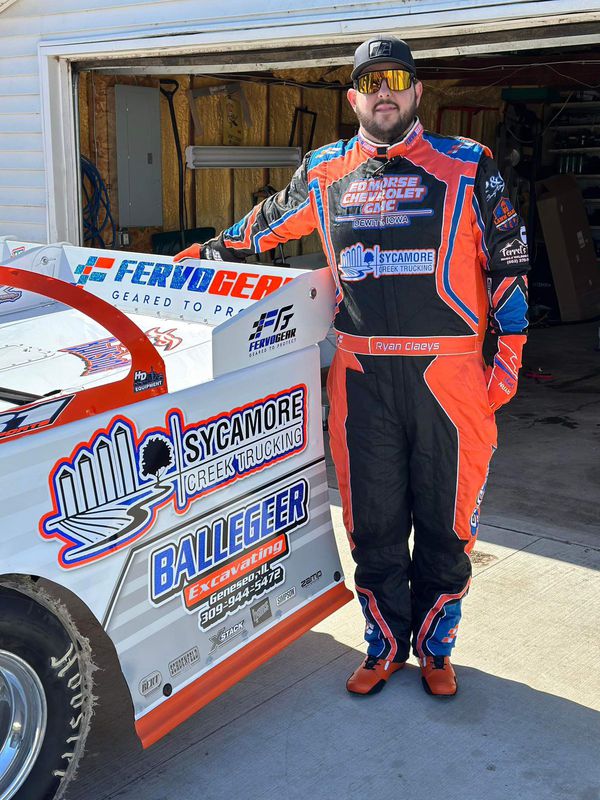
Racing shoes are SFI 3.3 flame-resistant boots with a thin sole that reads the pedals while protecting your feet from floorpan heat and a footwell fire. A street sneaker is too thick to feel the brake and not built to resist flame — the footwell sits close to fuel lines and the hottest part of the car, so this is no place for the wrong shoe.
Look for a thin, flame-resistant sole for pedal feedback, a Nomex® or FR suede upper, a narrow last so your foot doesn’t slip between pedals, and an ankle the suit leg covers cleanly. Most rulebooks call for SFI 3.3/5 shoes alongside a 3.2A/5 suit.
Custom SFI-5 suits →Balaclava & helmet support
A balaclava is an SFI 3.3 Nomex® head sock that seals the one gap your suit and helmet leave open — the skin around your face and neck. A helmet protects your skull, not the collar line, and that exposed band is exactly where flame can reach your face and hair. Most rulebooks require a balaclava for that reason; drivers wear one at every level because it also keeps sweat and hair out of the helmet liner.
Choose a single- or double-eyeport Nomex® hood that tucks into the suit collar, and pair the kit with a Snell SA- or FIA-rated helmet. The helmet isn’t an SFI 3.x item, but the kit isn’t complete without it — your gear has to seal to the helmet, so the two are specced together.
SFI ratings explained →
FR underwear & base layers
FR underwear is an SFI 3.3 Nomex® base layer worn under the suit — and with a single-layer suit it’s often what makes the package legal. A Nomex® top, bottoms and socks add an insulating air gap beneath the suit, the same way a second suit layer does, while wicking the sweat a fire-suit traps.
- Adds a layer — turns a single-layer suit into a multi-layer package, often required by rule.
- Insulating air gap — the same trapped-air principle that buys a double-layer suit its seconds.
- Comfort & wicking — pulls sweat off the skin so a hot suit stays bearable through a stint.
Free matching gear with your FervoGear suit
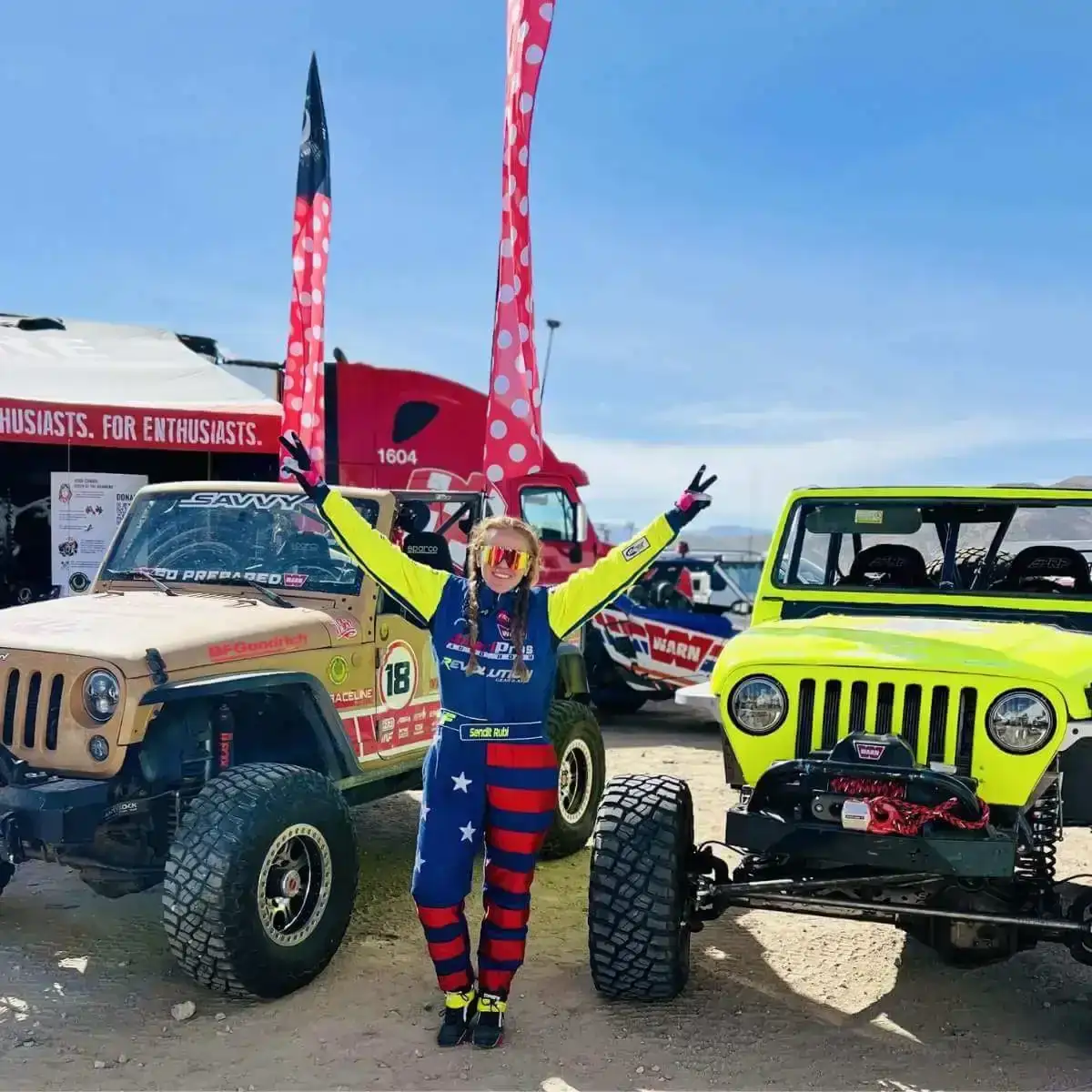
Every FervoGear custom suit includes a free matching gear set — gloves and shoes built to your design and certified to SFI 3.3 — so you order one color-matched, tech-legal kit instead of hunting separate pieces. The whole package is cut to your exact measurements and carries your colors from collar to cuff to boot.
You see the full kit in a free design mockup before anything is built. The suit is independently certified to SFI 3.2A/5 (double-layer Nomex®, ~10 seconds), and the matching gear seals it head to toe.
Everything above is the framework — these are the edge-case questions racers ask once they’re building a full kit.
Matching gear questions
What is a full set of racing safety gear?
Do my gloves and shoes need to be SFI rated too?
What SFI rating do racing gloves and shoes have?
Do I need FR underwear under my race suit?
Why does a balaclava matter if I have a helmet?
Can I mix gear brands across my kit?
Does matching gear have to match the suit’s color?
Is matching gear included with a FervoGear custom suit?
Building from the suit out? Start with custom SFI-5 race suits →
One matched kit, built to your design
Suit, gloves and shoes in your colors and ratings — see the full kit in 3–24 hours, built in 3.5 weeks.