Single vs Double Layer Race Suits — Which Do You Need?
The difference is layers and seconds. A single-layer suit (SFI 3.2A/1) is one layer of Nomex® giving about 3 seconds of fire protection — great for karting and track days. A double-layer suit (SFI 3.2A/5) bonds two layers for about 10 seconds — the rating most car racing requires. Choose single for karting; choose double for almost everything else.
This guide defines each suit, maps the SFI rating to layers, compares them side by side, shows the seconds-of-protection gap, covers FR underwear and price, and helps you pick the right one for your custom race suit.
- Single layer ≈ 3 sec · double layer ≈ 10 sec
- Single = karting & track days · double = most car racing
- From $349 (single) to $799 (double, with free gloves)
Single = 1 Layer
~3 sec · SFI 3.2A/1
Double = 2 Layers
~10 sec · SFI 3.2A/5
Karting → Single
Track days & autocross
Most Cars → Double
Dirt · circle · road · drag
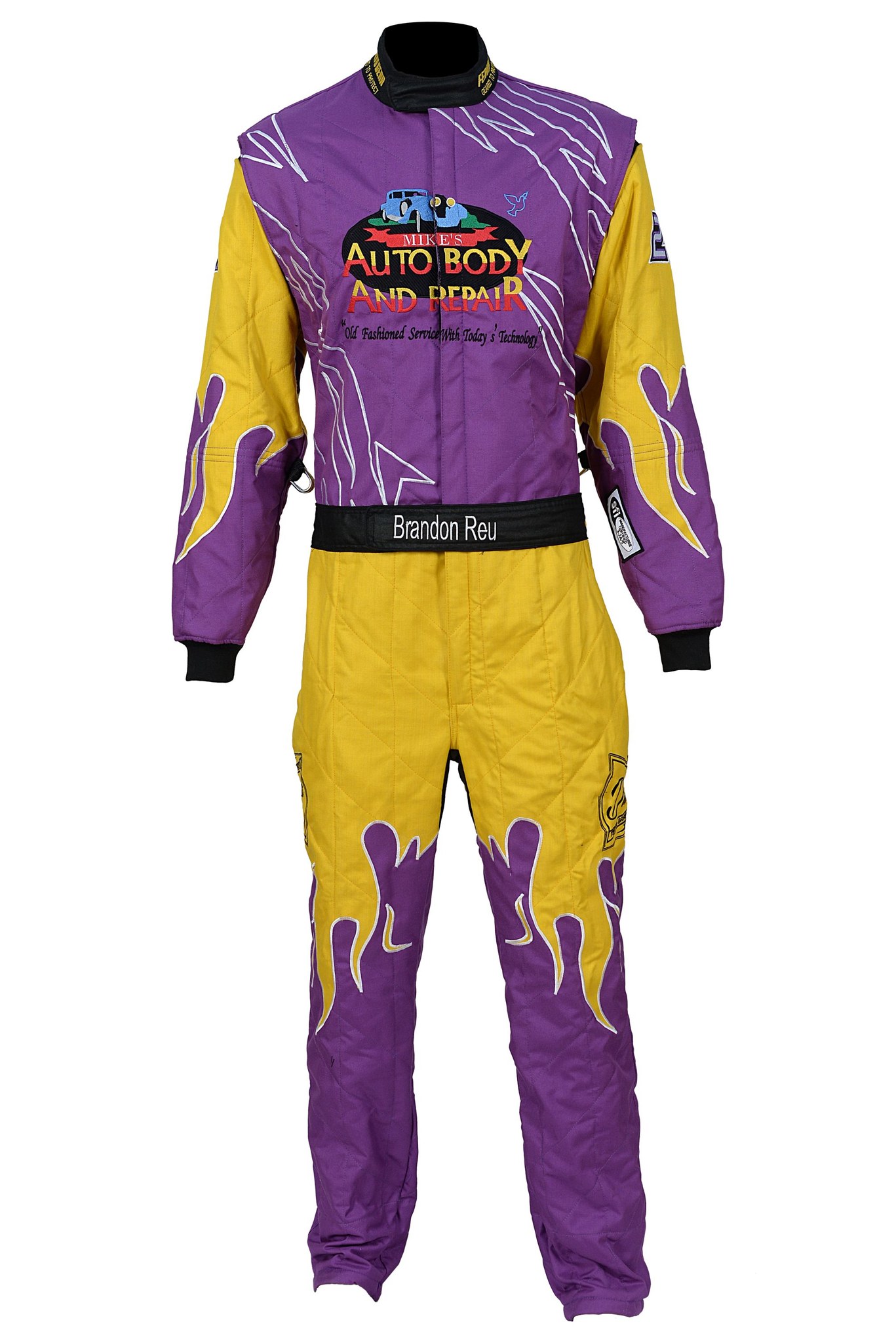
What is a single-layer race suit?
A single-layer suit is one layer of flame-resistant Nomex® certified to SFI 3.2A/1 — roughly 3 seconds of fire protection. It’s the lightest, coolest and cheapest certified option, which is why it dominates karting, autocross and casual track days where speeds and fire risk are lower.
The trade-off is real: most sanctioned car racing won’t pass a single layer at tech, and you’re usually expected to wear FR underwear beneath it to make up the protection gap. As a custom build it starts at $349.
SFI ratings explained →What is a double-layer race suit?
A double-layer suit bonds two layers of Nomex® to reach SFI 3.2A/5 — about 10 seconds of protection, more than triple a single layer. Those extra seconds are the margin to release your belts and get clear of a fire, which is why 3.2A/5 is the rating most dirt, circle, road and entry-level drag series write into the rulebook.
It runs a touch warmer and heavier than a single layer, but it needs no FR underwear, is legal across far more racing, and remains comfortable when it’s well built. As a custom build it starts at $799 with free matching gloves.
Custom SFI-5 race suits →
Single vs double layer — side by side
Every difference that matters between a single-layer SFI-1 and a double-layer SFI-5 race suit. Layers, seconds, underwear, legality and price — in one table.
| Feature | Double-layer (SFI 3.2A/5) | Single-layer (SFI 3.2A/1) |
|---|---|---|
| Nomex® layers | Double (2) | Single (1) |
| SFI rating | SFI 3.2A/5 | SFI 3.2A/1 |
| Fire protection (TPP) | ~10 seconds | ~3 seconds |
| FR underwear needed? | No | Usually yes |
| Weight & heat | Heavier, warmer | Lightest, coolest |
| Most auto-racing series | Accepted | Often not legal |
| Typical series | Dirt · circle · road · drag entry | Karting · track days · autocross |
| Starting price (custom) | $799 | $349 |
Seconds are TPP estimates — the binding requirement is whatever your series rulebook prints.
Seconds of protection — ~3 vs ~10
The gap is roughly 7 seconds, and 7 seconds is a lot in a fire. The TPP (Thermal Protective Performance) test sets how long each suit holds before a wearer would take a second-degree burn.
Seconds before a second-degree burn
TPP estimate · 0 → 12 secondsThose extra seconds aren’t about toughing out flames — they’re the time to release the belts and get clear of the car. A single layer reacts; a double layer gives you room to escape. That’s why the rating, not the look, is the first thing tech checks.
How layers earn the SFI rating
The rating is earned by layers, not by the brand name. Each Nomex® layer adds an insulating air gap, and that trapped air slows heat far more than the fabric alone. A single-layer suit holds ~3 seconds and certifies at 3.2A/1; add a second layer with its air gap and the same suit reaches ~10 seconds and certifies at 3.2A/5.
So the jump from single to double isn’t marginal — it’s more than triple the protection from one extra layer. Higher SFI levels (3.2A/15, 3.2A/20) simply stack more layers for the hottest drag fires.
SFI ratings explained →Double-layer cross-section (3.2A/5)
FR underwear — single needs it, double usually doesn’t
Your layer count decides whether FR underwear is a requirement or a comfort choice. It’s one of the biggest hidden differences between the two suits.
Under a single-layer suit
3.2A/1One layer of Nomex® rarely meets a sanctioned car-racing requirement on its own, so most rulebooks expect SFI-rated FR underwear beneath it. That base layer adds the extra seconds the single shell can’t — but it’s another purchase, another item to launder, and another thing tech can ask to see.
Under a double-layer suit
3.2A/5The second Nomex® layer already supplies the protection FR underwear is added to provide, so most dirt, circle and road series don’t require anything underneath a 3.2A/5. Many drivers still wear a thin FR or moisture-wicking base for comfort and heat management — but it’s a choice, not a rulebook line.
See the full base-layer breakdown in what to wear under a race suit →
The price difference
A custom single-layer suit starts at $349; a custom double-layer SFI-5 suit at $799 — and the double-layer price includes free matching gloves. The extra cost buys a second Nomex® layer, the higher 3.2A/5 certification, broader series legality and the FR underwear you no longer have to add.
Because the difference is what most car racers actually need, the double layer is usually the better value over a season — and financing runs from about $67/month. Both are 100% custom to your colors, design and measurements.
How much a custom suit costs →Double-layer includes free matching gloves + a free design mockup. Financing from ~$67/month.
So which do you need?
If you race a full car in a sanctioned series, you almost certainly need a double-layer SFI 3.2A/5. A single layer makes sense only for karting, autocross and casual track days. When a class lists no number, default to double — it’s legal across the widest range.
Karting & autocross
Low speed and low fire risk mean pure karting and autocross commonly allow a single-layer 3.2A/1 — the lightest, coolest, cheapest certified suit.
Dirt, circle & road racing
The broad middle of car racing writes 3.2A/5 into the rulebook. A double-layer suit is legal across the widest range and gives ~10 seconds of margin.
Entry-level drag
Bracket and sportsman classes start at 3.2A/5 and climb with ET. A double layer covers entry-level drag; faster cars step up to higher SFI levels.
Still unsure? The decision comes down to three checks: what your rulebook prints, how fast and how hot your discipline runs, and whether you might move up. When two of those point to a full car in a sanctioned series, the double layer is the safer, longer-lasting buy.
How to measure for a race suit →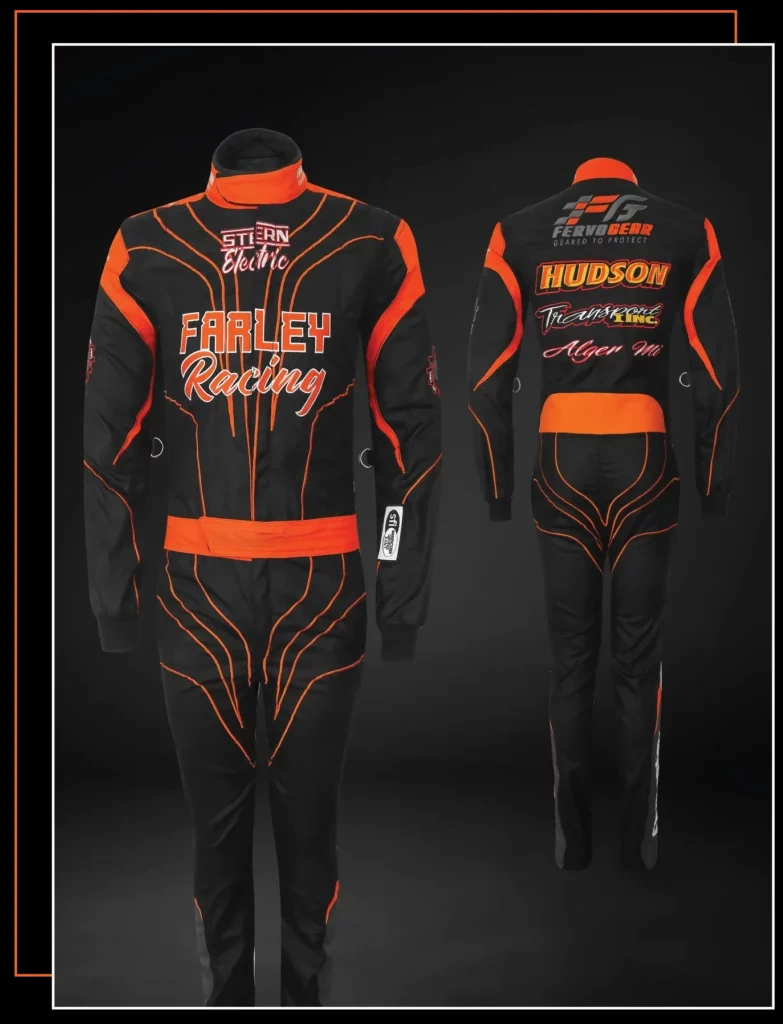
How to start your custom suit
For most racers the answer is the double layer — so we build every custom suit to the SFI 3.2A standard, with the most-ordered spec independently certified at 3.2A/5: double-layer Nomex®, ~10 seconds of protection, the rating most series require, cut to your exact measurements and your design.
Start with a free design mockup before anything is built — see your exact colors and layout in 3–24 hours, then a verifiable sewn-in SFI tag on a suit delivered in about 3.5 weeks. Double-layer ships with free matching gloves, from $799 with financing from ~$67/month.
Build a custom SFI-5 race suit →Everything above is the framework — these are the edge-case questions racers ask once they’ve picked a layer.
Single vs double layer questions
Do I need a single or double layer race suit?
How many seconds of protection does each give?
Is a single-layer suit legal for my series?
Do I need FR underwear with a double-layer suit?
Why does a double layer protect so much longer than a single?
Is a double-layer suit hotter and heavier?
How much more does a double-layer suit cost?
Can I upgrade a single-layer suit to double later?
Once you know your layer, learn how to measure for a race suit →
Get the right layer, built to your design
Tell us your series and we’ll spec the certified suit it requires — see your exact design in 3–24 hours, built in 3.5 weeks.